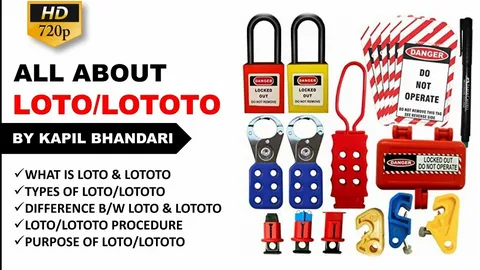
In the world of machinery and maintenance, safety is the number one priority. Working on large, powerful equipment comes with the very real danger of unexpected startup or the sudden release of stored energy—like built-up steam pressure, electrical power, or mechanical motion.1 To protect workers from these hazards, a crucial set of steps known as the LOTOTO procedure is used.2
LOTOTO procedure stands for Lock-Out, Tag-Out, and Try-Out.3 It’s a formal, structured way to make sure that a machine is completely shut down, all its energy sources are safely disconnected, and it cannot be accidentally started back up while someone is working on it.4 Think of it as putting the machine in a “safe coma” before any repair or service work begins.
The core idea is simple: if you can physically prevent a machine from running and confirm it’s completely powerless, you remove the risk of injury from its operation.5
Breaking Down the Steps
The LOTOTO procedure isn’t just one action; it’s a detailed sequence of steps designed to be foolproof.6
1. Preparation:
Before anything else happens, the authorized worker (the person who will perform the maintenance) needs to know the machine well. They check the specific procedures for that piece of equipment, identify all the energy sources it uses (electrical, hydraulic, pneumatic, thermal, etc.), and figure out exactly how to disconnect each one.7 They also notify all other employees who might be affected that the machine is going offline.8 Communication is key here to avoid confusion and unexpected attempts to use the equipment.
2. Shutdown:
The machine must be turned off using its regular controls. This is done following the normal operating sequence to prevent damage to the equipment itself. Simply hitting the ‘Emergency Stop’ might not be the right way to safely prepare for servicing.
3. Isolation:
This is where the actual disconnection from the energy sources happens.9 The worker manually operates devices like circuit breakers, disconnect switches, or valves to physically separate the equipment from its power supply.10 This is a critical step; simply turning a switch off is not enough—the energy must be completely isolated, meaning it can’t flow to the machine.11
4. Lockout:
Once isolated, a Lockout device is applied to each energy-isolating point.12 This is usually a personal padlock that prevents the switch, breaker, or valve from being moved back into the ‘on’ or ‘open’ position.13 Only the worker who placed the lock holds the key.14 If multiple people are working on the same machine, each person must attach their own personal lock.15 This gives every individual worker control over their own safety—no one can remove the lock and energize the equipment without that person’s knowledge.16
5. Tagout:
With the lock applied, a clear Tag is immediately attached to it. The Tag provides important warnings and information: DO NOT OPERATE.17 It usually identifies the person who applied the lock, the date and time, and the reason for the lock (e.g., “motor repair”).18 The Tag is a visual warning that reinforces the physical barrier of the lock.19
6. Stored Energy Check:
Machines often hold energy even after they are disconnected.20 Think of a spring under tension, a pressurized air line, or a capacitor holding an electrical charge. This stored, or residual, energy must be safely released or dissipated.21 Air lines are vented, capacitors are discharged, and heavy parts that could fall are blocked or secured. The goal is a truly LOTOTO procedure zero energy state.22
7. Try-Out (Verification):
This is the final and most important check that completes the LOTOTO procedure and is what makes it different from a simple Lockout/Tagout (LOTO). After all the isolation, locking, tagging, and stored energy checks are done, the worker must physically try to start the machine using its normal controls (like pushing the ‘start’ button).23 If everything has been done correctly, the machine will not start, move, or show any signs of life.24 This Try-Out step provides absolute verification that the energy isolation is effective and the machine is safe to work on. The controls are then returned to the ‘off’ position.25
8. Performing the Service:
Only after the Try-Out confirms zero energy can the maintenance or repair work begin.26
9. Restoring the Equipment:
When the work is finished, the area is cleared of all tools and debris, and guards are put back in place.27 All affected employees are notified that the machine is about to be re-energized.28 Finally, and only after ensuring everyone is safe and clear, the authorized worker removes their personal lock and tag.29 Once the locks and tags are gone, the energy isolating devices can be returned to their operating positions, and the machine can be safely brought back online.30
6